

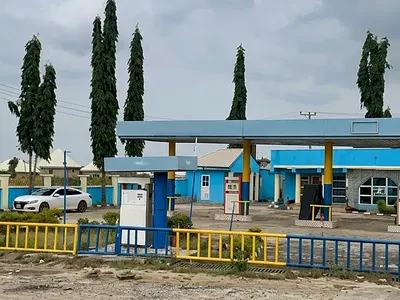
The average price of furnished filling stations for rent in Abuja is ₦50,000,000 per annum. The prices vary by location, size and features and range from ₦10,000,000 to ₦50,000,000 per annum. There are 6 available furnished filling stations for rent in Abuja, Nigeria. The filling stations have been listed by estate agents who can be contacted using the contact information provided for each filling station listing. The list can be filtered by price, furnishing and recency.
Filling station for lease
facilities include:-
- 10 pumps
- mini mart
- lube bay
location :- along katampe kubwa express way, abuja
title document :- fcda approved c of o.
rent/lease :- #25 million naira per year for 5 ye...
Filling station for lease
this is well built filling station and strategically located in karmo.
location :- karmo abuja
details:-
- 6 pumps for pms
- 1 pump for ago
- 1 pump for dpk
6 underground tanks of 45,000 litres each as given below
- 4 tanks for pms
- 1 tank for dpk
- 1 tank for ago
lube bay
mini mart
office building with offices
generator
rent/lease :- #45 million naira per year
lease duration :- 10 ye...
Filing station for lease
location: kuchikau, masaka ado axis
8pms
1deisel
1 kero
33,000 underground tank
going for 10m per year x 5yrs above
inspection fee applies
#v(t)fr...
*filling station for rent\lease in karu abuja*
underground tank four pms 45000 each
one ago 45000
one dpk 45000
pumps 9 fuel
dpk one pump
ago one pump .
*rent: #30m* per year
location: karu - jikowyi road, abuja
agency and legal:20%
inspection fee applies - note this pls.
#v(t)u...
₦30,000,000 per annum
Property Finders (ibile Global Mart Limited)
09068786533
Share this
The average price of furnished filling stations for rent in Abuja is ₦50,000,000 per annum. The prices vary by location, size and features and range from ₦10,000,000 to ₦50,000,000 per annum.
About Abuja, Nigeria
Abuja is the capital city of Nigeria. It is located in the centre of Nigeria, within the Federal Capital Territory (FCT). Abuja is a planned city, and was built mainly in the 1980s. It officially became Nigeria's capital on 12 December 1991, replacing Lagos, which is still the country's most populous city. At the 2006 census, the city of Abuja had a population of 776,298, making it one of the top ten most populous cities in Nigeria. The unofficial metropolitan area of Abuja is well over three million, which would make it the fourth largest urban area in Nigeria only surpassed by Lagos, Kano and Ibadan.